
Flat Roofing
Torch-down roofing for flat and low-slope roofs, with heat-sealed seams.
View service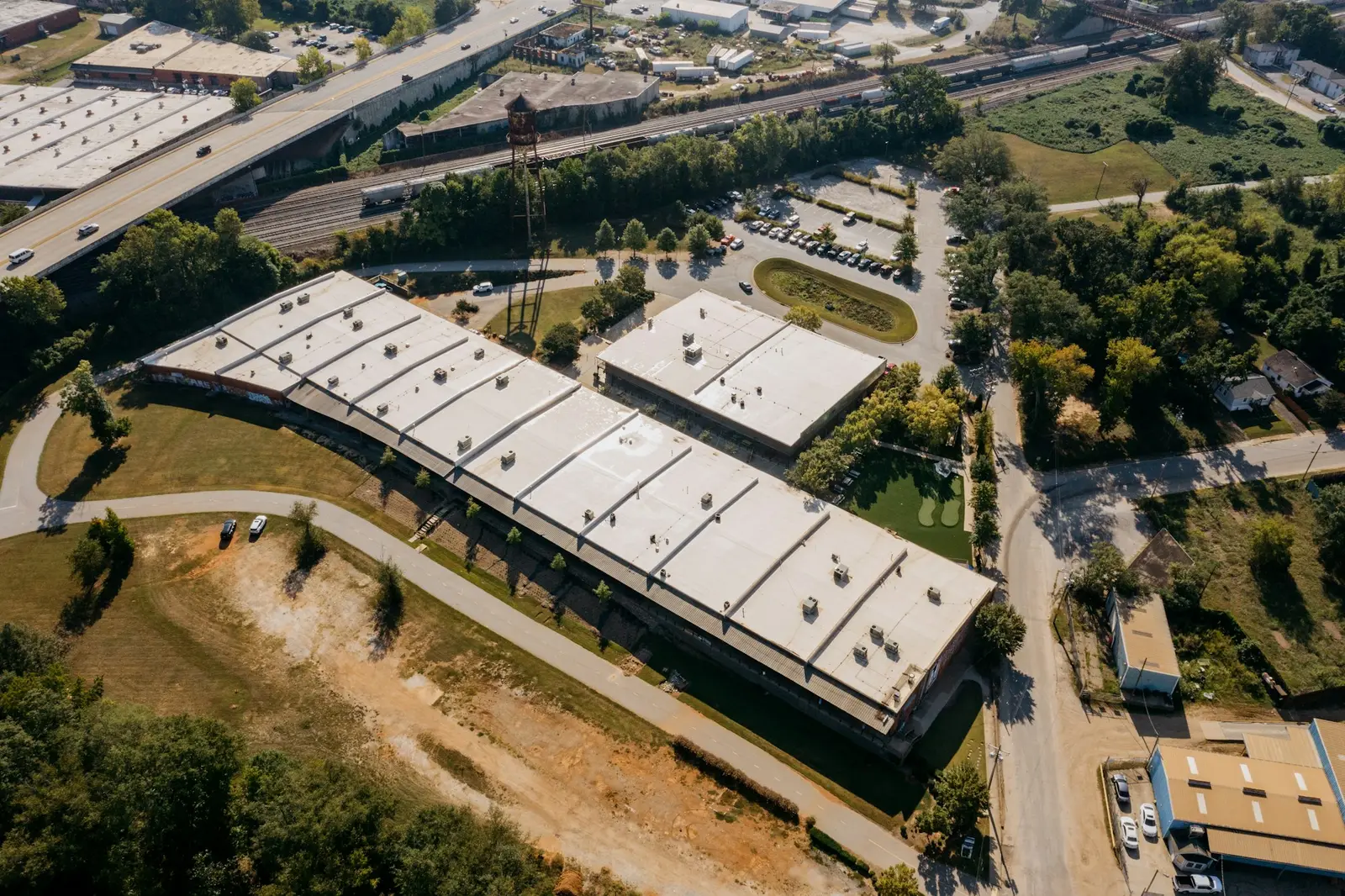
CSLB License #1162060 · Based in Imperial Beach, CA
Low-slope commercial roofs in TPO, PVC and torch-down.
CSLB License #1162060 · Bonded · Based in Imperial Beach, CA
The service
Most commercial buildings have large low-slope roofs with rooftop units, vents, drains and walls around the edges. Each of those is a place the roof has to stay sealed.
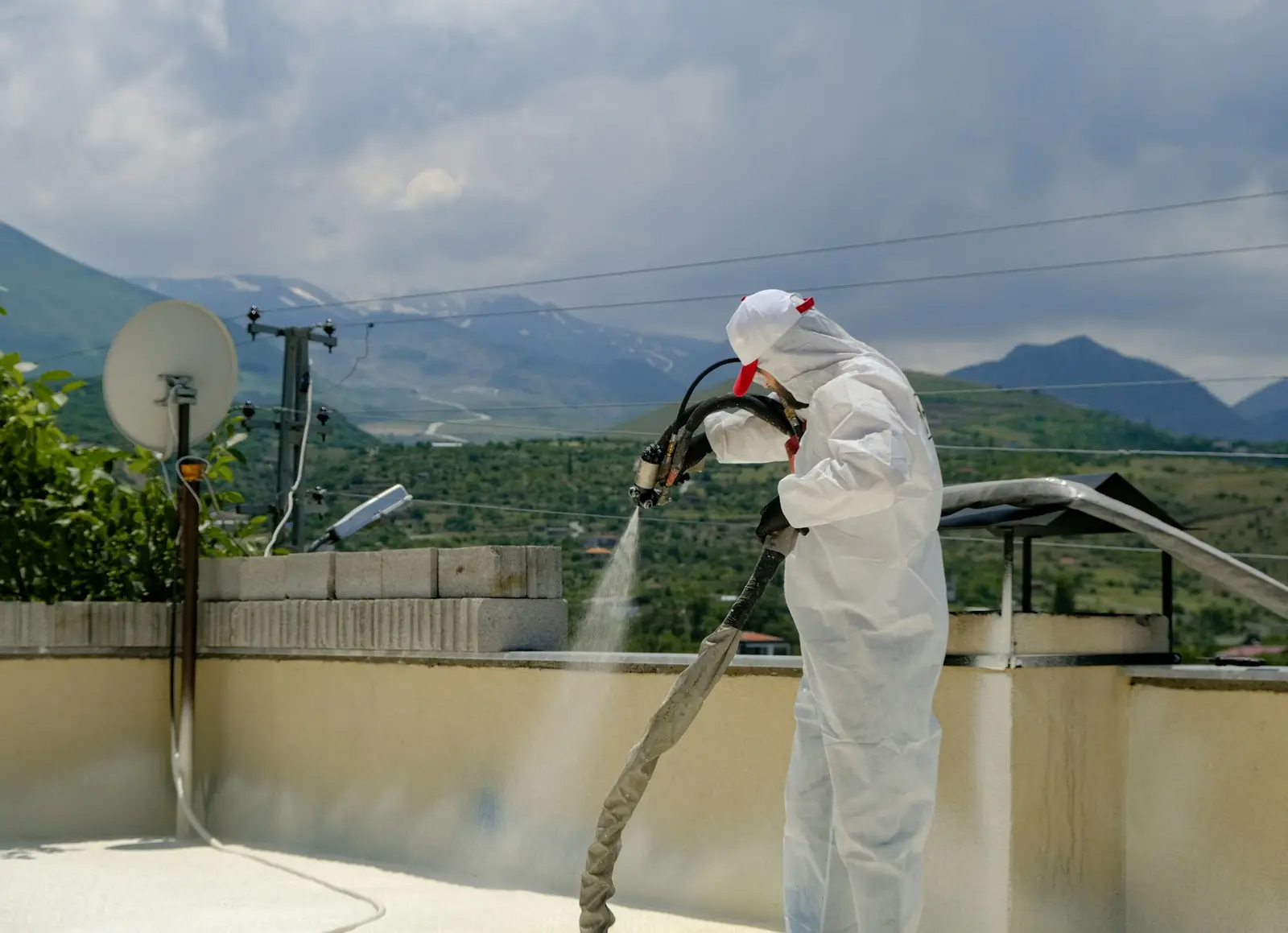
We work with three common systems on commercial roofs: TPO and PVC, which are single-ply membranes with seams welded by hot air, and torch-down, which is built from rolled layers sealed with a torch.
Roof replacement
A new membrane roof over a commercial building.
Repairs
Open seams, punctures and leaks around openings.
Rooftop units and curbs
Flashing around HVAC units and equipment.
Parapets and edges
Where the roof turns up walls and meets the edge.
From above
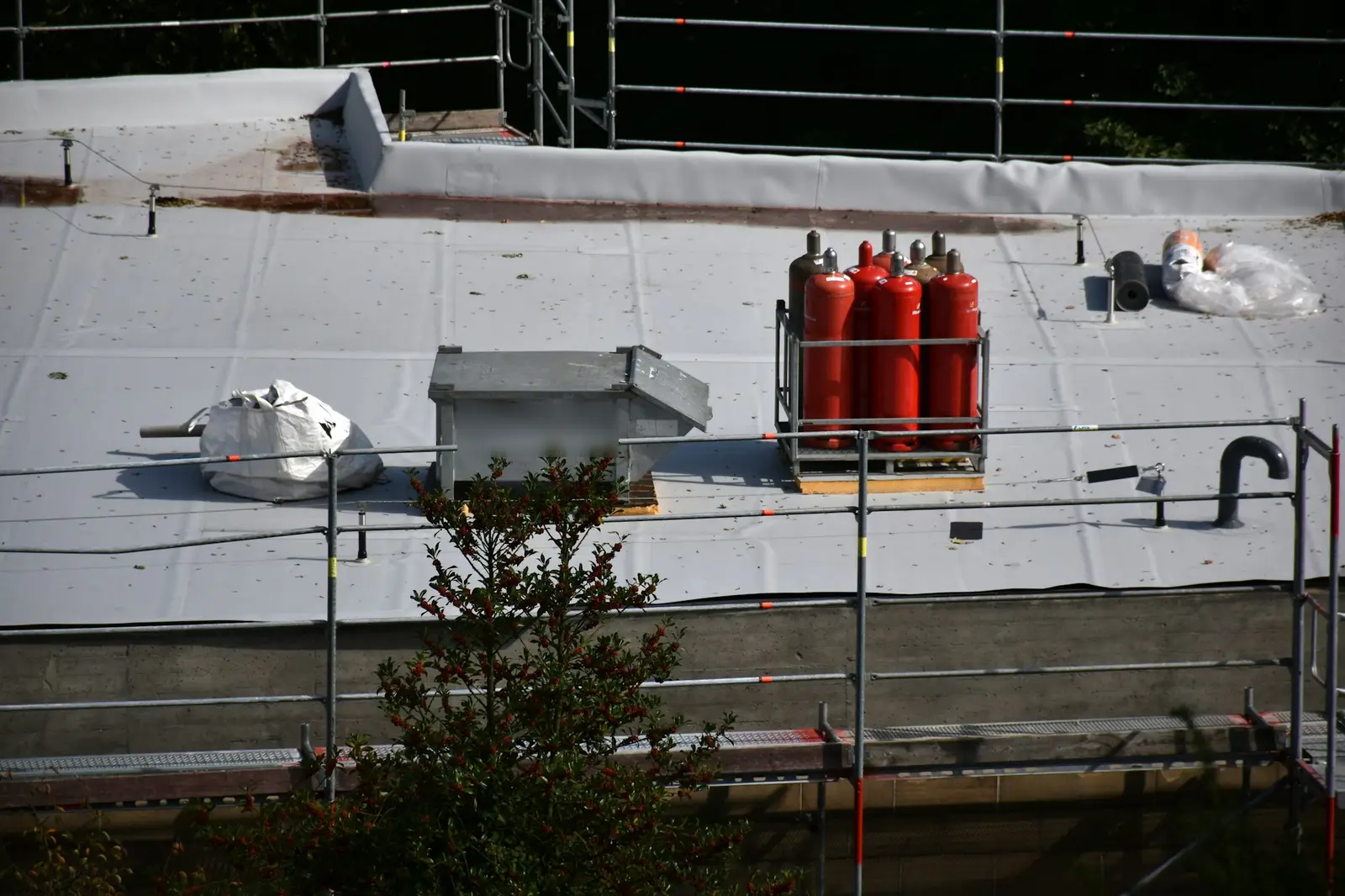
A commercial roof is one wide membrane broken up by everything that sits on it or passes through it. Here is one seen from above.
1. Membrane field
The main roof surface, in sheets rolled out side by side.
2. Welded seams
Where sheets overlap and are welded or torched closed.
3. Rooftop unit
HVAC equipment on a curb that has to be flashed in.
4. Drain
Where water leaves the roof, sealed into the membrane.
5. Parapet wall
The low wall at the edge, where the membrane turns up.
6. Pipes and vents
Smaller openings, each with its own flashing.
Systems
These are the commercial systems we work with. The right one depends on the building, and we can go over each.
TPO
A single-ply membrane rolled out over the roof, with seams welded by hot air.
PVC
A single-ply membrane of a different material, also with hot-air welded seams.
Torch-down
Rolled layers of modified bitumen with laps sealed by a torch.
What's involved
Every roof is different. This is the general order of the work, and we go over the specifics for your roof with you.
We look at the membrane, seams, drains, walls and equipment, and talk through the options.
Old roofing is removed or prepared as the system calls for, and damaged areas are dealt with.
The membrane or torch-down layers go down and every seam is welded or torched closed.
Units, curbs, drains, walls and edges are flashed into the new roof.
Planning
No two roofs are the same. These are the things that change how commercial roofing work is planned.
Nothing here is required. A few of these help us understand the roof.
Photos and questions can go straight to (619) 707-6224 by call or text.
Both are single-ply membranes rolled out over the roof with seams welded by hot air. They are different materials, and the choice depends on the building and what sits on the roof. We can go over both.
Yes. Torch-down is one of the three systems we work with on commercial roofs, along with TPO and PVC.
Around the openings and the edges: seams, drains, rooftop units, pipes and where the roof meets a wall. Those are the places we check first.
Call or text (619) 707-6224, or send a request through the estimate form. Tell us about the roof and what is going on with it.
More services
Estimate
Tell us what you have in mind. Prefer to talk? Call or text (619) 707-6224.
Tell us about the project.